He left everything to build payment systems.
He was on track for law school and a half-million-dollar career. Then he walked away from all of it to build Payd a company solving global payments from Africa. This is what it actually looks like to choose the hard path.Through his journey we learn how startups raise money in Kenya.
The Founder Who Walked Away from Certainty
There are two kinds of startup founders.
The first build because they have nothing to lose.
The second build despite having everything to lose.
The founder of Payd belongs firmly in the second category.
Before entrepreneurship, his path was already mapped out. Law school. A respected profession. A stable career. The kind of future families celebrate and societies encourage. For many people, that level of certainty is the reward for years of discipline and sacrifice.
He chose to walk away from it.
Not recklessly. Not on a whim. But with a clear understanding of what he was giving up and an even clearer conviction about the problem he wanted to solve.
That problem was simple to describe, but enormous in scale: Africa's businesses are increasingly global, yet the financial infrastructure they rely on remains fragmented, expensive, and exclusionary.
Building Payd
Payd is building the infrastructure that enables African businesses to operate seamlessly across borders.
The company helps businesses receive payments from international customers, pay suppliers globally, and manage multi-currency transactions without the complexity that has long defined cross-border commerce on the continent.
For many African entrepreneurs, global payments remain one of the biggest barriers to growth. International payment providers often have limited coverage, restrictive onboarding requirements, or fees that significantly reduce already-thin margins.
As a result, businesses are forced into workarounds: foreign bank accounts, complicated banking relationships, informal payment networks, or alternative financial rails that were never designed to solve the problem at scale.
Payd's vision is straightforward: replace the workaround economy with infrastructure built specifically for African businesses.
The Cost of Conviction
What makes this story compelling isn't just the company.
It's the founder's willingness to accept uncertainty in pursuit of a solution he believes should exist.
In the episode, he speaks candidly about the emotional cost of the decision. The difficult conversations with family. The pressure of watching former classmates move into prestigious careers while he navigated the unpredictability of startup life.
At one point, he reflects on the question people ask him most often:
*"People keep asking if I'm scared. I'm terrified. But the alternative spending my life solving someone else's problems terrifies me more."*
That tension sits at the heart of the Payd story.
Not fearlessness.
Conviction despite fear.
Why This Matters
Payd sits at the intersection of two powerful trends shaping African business.
The first is the internationalisation of African entrepreneurship. More founders are building products for customers beyond their home markets. Companies launched in Nairobi, Lagos, Kigali, Accra, and Cape Town increasingly think globally from day one.
The second is the growing gap between Africa's commercial ambition and the financial infrastructure available to support it.
Businesses can now reach customers anywhere in the world. Moving money remains far more complicated.
That gap represents one of the continent's largest opportunities.
For Payd, the mission is not simply about payments. It's about enabling African businesses to participate fully in the global economy.
Whether the company succeeds will depend on execution.
But the reason it exists is already clear.
A founder looked at a secure future, looked at a broken system, and decided the bigger risk was doing nothing.
“People keep asking if I'm scared. I'm terrified. But the alternative spending my life solving someone else's problems that terrifies me more.”
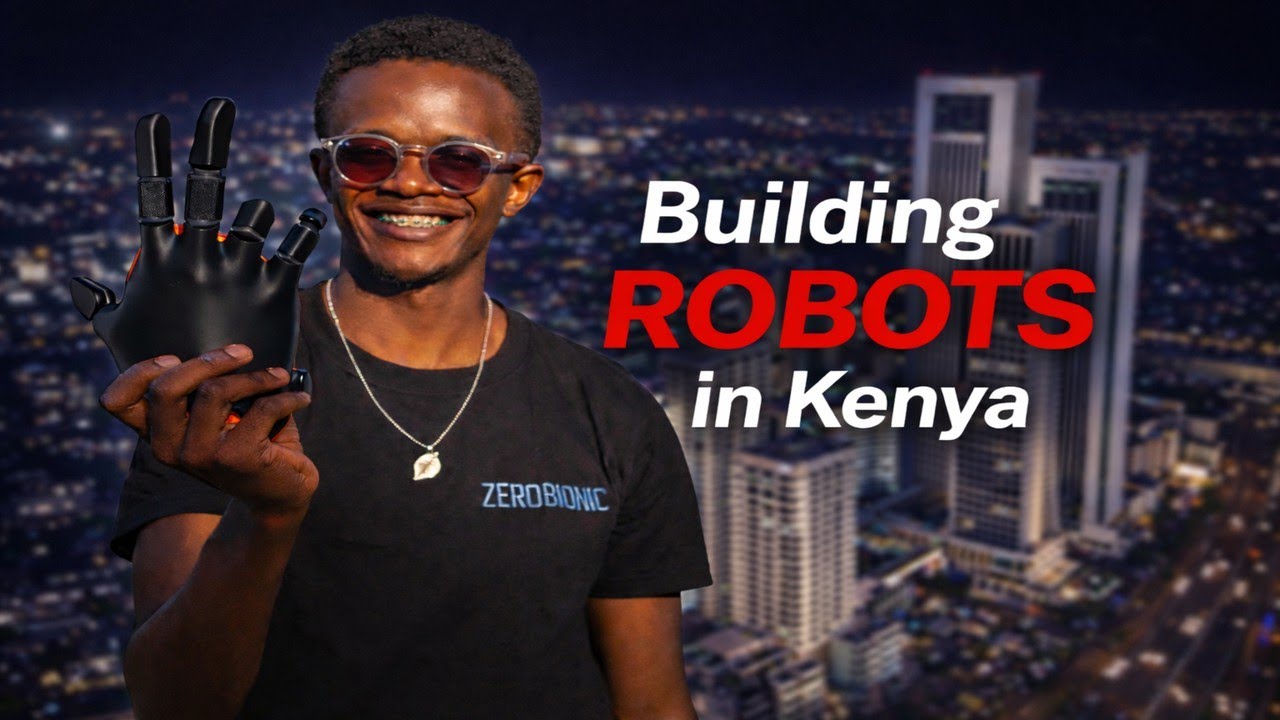 Deep Tech
Zerobionic: Building the Future from Africa
What does it mean to build deep tech from Africa? Zerobionic is answering that question in real time engineering solutions at the edge of human potential, with the continent's constraints as fuel, not obstacle.
 City Spotlight
Addis Ababa Is Not What You Think
The world has a fixed image of Addis Ababa. We went to find out how far from that image the city has moved and came back with something far more interesting than we expected.
 Hardware
Quepay: The Kenyan Startup Building Hardware, Not Apps
Quepay doesn't fit the Nairobi startup template. No app. No subscription model. Just engineers with soldering irons, building payment infrastructure for the physical world from the ground up.