He Was There When the Internet Began.
Dr. Bright was a software engineer in Africa during the Internet Bubble before fibre, before mobile money, before anyone used the word 'tech hub.' Now he is one of the continent's leading cybersecurity experts and a Strathmore University lecturer. His story is African tech history in one career.
Before the Ecosystem
When people talk about Africa's tech industry, they usually start from the mid-2000s M-Pesa, iHub, Ushahidi, the moment the world began to notice.
Dr. Bright was working in African technology a decade before that.
His career begins in the Internet Bubble era a moment of global technology mania that played out very differently in Africa than in Silicon Valley. There was no venture capital. There was no fibre cable. There was dial-up internet, unreliable power, and a handful of people who had decided that software was the future and were building anyway.
"People don't realise how hard it was," he says in the episode. "You were building for a market that didn't have broadband, on hardware that was years behind, with almost no community of peers. You were inventing the wheel with a broken axe."
The Bitcoin Years
Dr. Bright's story intersects with Bitcoin in its earliest days before it was an asset class, before it was a payment system, when it was still primarily an experiment in cryptography and decentralised consensus. His perspective on what Bitcoin's early days actually looked like from an African technical context is one of the more unusual things in the episode.
The technology was interesting. The practical applications were limited by the same infrastructure constraints that limited everything else. But the theoretical implications of a trustless, borderless financial system were immediately understood by engineers who had spent their careers working in environments where traditional financial infrastructure was exclusionary or absent.
"When you grow up building things where the bank doesn't work for everyone, you understand why decentralisation matters faster than someone who grew up in Switzerland."
Cybersecurity and the Stakes
Dr. Bright's current work sits at the intersection of his technical depth and his teaching responsibilities. As a cybersecurity expert at Mara and a lecturer at Strathmore, he occupies a position that is rare in African tech: someone who operates at the leading edge of a critical field while simultaneously building the next generation of professionals who will work in it.
The cybersecurity challenge in Africa is specific and urgent. A continent going digital at speed, with large populations moving their financial and personal lives online, needs robust security infrastructure and educated security professionals. The current supply of both is insufficient for the scale of what is happening.
The Vision
What Dr. Bright brings to the conversation about African tech that most commentators lack is perspective. He has seen this industry from the beginning. He has watched problems that seemed intractable become solved. He has watched solutions that seemed simple become complex.
His vision for the African tech industry is not naive optimism. It is earned conviction the kind that comes from having been there for the whole story, not just the current chapter.
“When you grow up building things where the bank doesn't work for everyone, you understand why decentralisation matters faster than someone who grew up in Switzerland.”
 Deep Tech
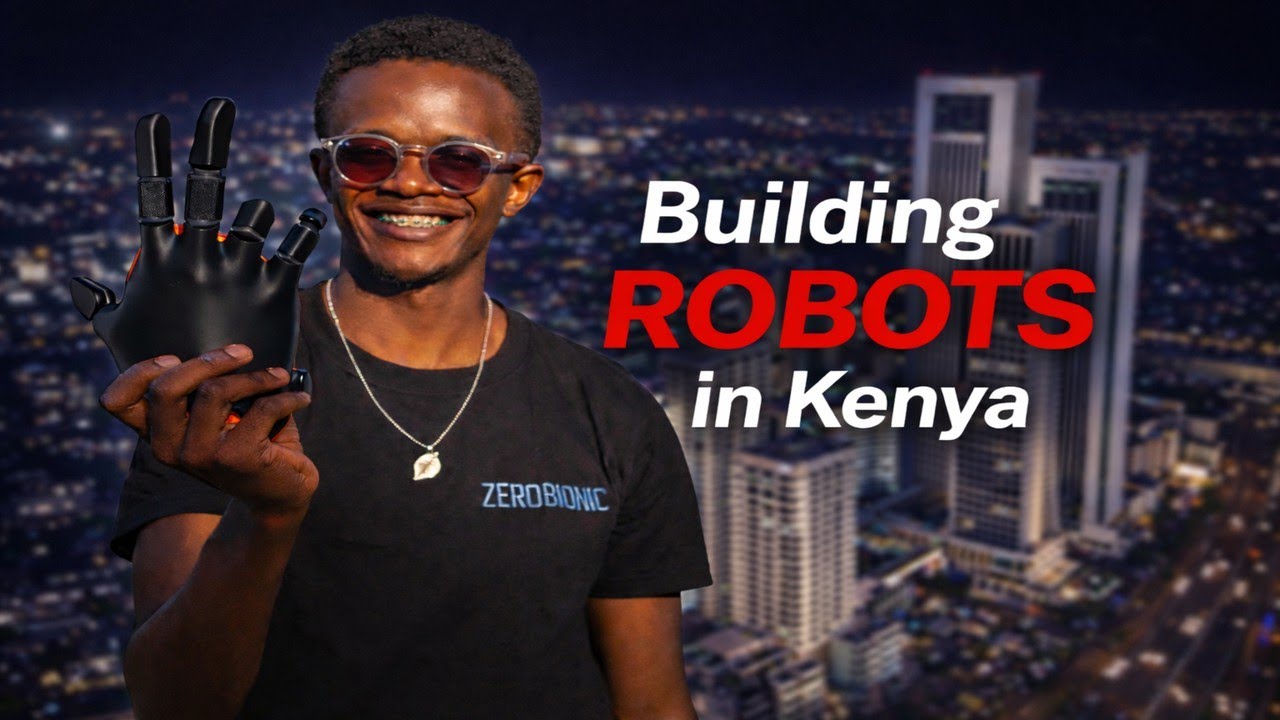
Zerobionic: Building the Future from Africa
What does it mean to build deep tech from Africa? Zerobionic is answering that question in real time engineering solutions at the edge of human potential, with the continent's constraints as fuel, not obstacle.
 City Spotlight
Addis Ababa Is Not What You Think
The world has a fixed image of Addis Ababa. We went to find out how far from that image the city has moved and came back with something far more interesting than we expected.
 Hardware
Quepay: The Kenyan Startup Building Hardware, Not Apps
Quepay doesn't fit the Nairobi startup template. No app. No subscription model. Just engineers with soldering irons, building payment infrastructure for the physical world from the ground up.