The Travel Tech Wizard.
Brian Nduhiu spent years building software for startups and leading engineering teams at Triply. Today, he has stepped out to build StudioX and Split Out, shifting from executing other people’s ideas to shipping his own products for the African market.
He Helped Build Other People's Products. Now He's Building His Own.
For years, Brian Nduhiu was the kind of engineer most people never hear about.
No viral social media posts.
No fundraising headlines.
No conference stages.
Just code.
Behind screens and across time zones, he worked with startups, companies, and AI projects, quietly building software that powered other people's ambitions.
Like many talented African engineers, Brian's journey started in freelancing.
He took on projects wherever he could find them. Some were exciting. Some paid the bills. Others exposed him to emerging technologies that would later shape his career.
At one point, he even worked on projects connected to training artificial intelligence systems, contributing to a wave of technology that is now reshaping entire industries.
The work sharpened his technical skills.
But it also exposed him to a bigger realization.
The people creating the most value weren't always the ones writing the code.
They were the ones building companies.
From Freelancer to Engineering Leader
As his experience grew, so did his responsibilities.
Brian eventually joined Triply, where he rose to become Head Engineer.
The role gave him a front-row seat to what it takes to build and scale technology products.
Engineering at an early-stage company is rarely just about writing software.
It's about solving business problems.
Balancing technical debt against growth.
Building systems that can scale.
Hiring talent.
Managing deadlines.
Making difficult trade-offs with limited resources.
The experience transformed him from a developer into a product-minded builder.
But another question started to emerge.
If he could help build someone else's vision, could he build his own?
Taking the Founder Leap
Leaving a stable position is rarely easy.
For engineers, the challenge is often even greater.
Technical talent is highly employable. There is always another job, another contract, another client.
The safer path is usually available.
Yet many founders eventually discover that security and ambition often pull in different directions.
Brian made the decision to leave.
Not because he had all the answers.
But because he wanted the opportunity to create something that belonged to him.
That decision led to the creation of StudioX.
Building StudioX
Today, StudioX operates as a software engineering company helping businesses design, build, and launch digital products.
At a time when startups increasingly need technical expertise but often lack internal engineering teams, companies like StudioX fill an important gap.
They become the builders behind the builders.
From web applications to business systems and digital platforms, StudioX works with organizations looking to turn ideas into working products.
But services were only part of the vision.
Brian wanted to build products as well.
The Problem With Events
Across Kenya and much of Africa, event organizers still struggle with fragmented ticketing systems.
Many rely on manual processes.
Others use tools designed for markets with very different realities.
The result is often poor user experiences for both organizers and attendees.
Brian saw an opportunity.
What if event management and ticketing could be simpler?
What if organizers had better tools to sell tickets, manage audiences, and run events?
That idea became Split Out.
Building Split Out
Split Out is StudioX's ticketing and event management platform.
The goal is straightforward:
Help event organizers create, manage, promote, and sell tickets more efficiently.
While ticketing might seem like a crowded space, every market has unique challenges.
Payment systems differ.
Consumer behavior differs.
Infrastructure differs.
The most successful products are often the ones built closest to the people they serve.
For Brian, Split Out represents more than another software product.
It represents a transition.
A shift from building for clients to building assets.
From selling time to creating scalable solutions.
The New Generation of Kenyan Founders
For years, conversations about African technology focused heavily on funding announcements.
Who raised money.
Who entered an accelerator.
Who secured venture capital.
But a quieter movement has been happening in the background.
A growing number of African engineers are becoming founders.
They are taking years of technical experience accumulated through freelancing, remote work, startups, and global projects and applying it to problems they understand firsthand.
Many may never raise millions in venture funding.
Some will build profitable businesses instead.
Others will create products that solve specific challenges in local markets.
Brian's story sits within that broader trend.
A freelancer who became an engineering leader.
An engineering leader who became a founder.
And a founder now building both services and products.
The Bigger Picture
Technology ecosystems are often measured by the number of startups they produce.
But perhaps a better measure is the number of builders willing to take the leap.
People willing to leave stable careers and bet on their own ideas.
People willing to trade certainty for possibility.
Brian Nduhiu's journey reflects that reality.
From freelance projects and AI work to leading engineering teams and launching StudioX, his story is ultimately about progression.
Not a single breakthrough moment.
Not overnight success.
But years of learning, building, and taking calculated risks.
And like many founder stories, the most interesting chapter may still be ahead.
---
Hustle Yangu Note: We first featured Brian Nduhiu during his time as Head Engineer at Triply, where he shared insights into software engineering, product development, and the growing opportunities for African developers. Today, he is focused on building StudioX and growing Split Out, his event ticketing platform designed for the African market.
“Building the right product requires starting from African travel behaviour not adapting from Western defaults.”
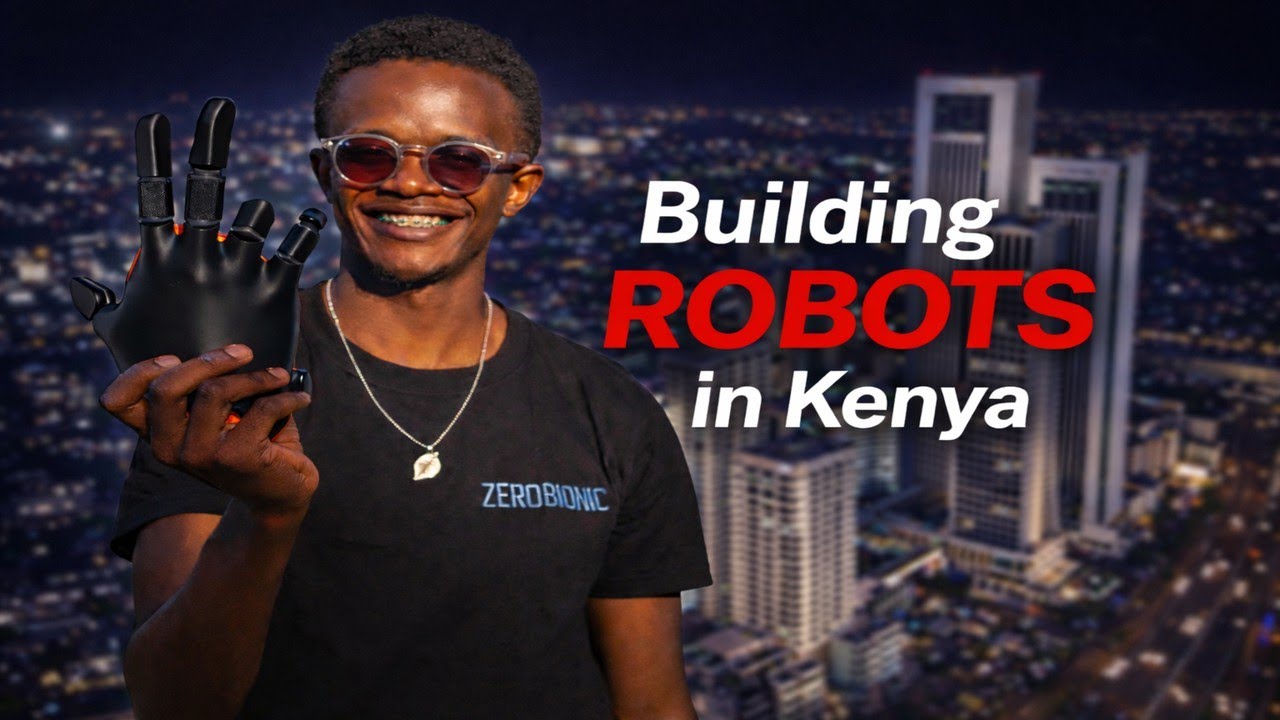 Deep Tech
Zerobionic: Building the Future from Africa
What does it mean to build deep tech from Africa? Zerobionic is answering that question in real time engineering solutions at the edge of human potential, with the continent's constraints as fuel, not obstacle.
 City Spotlight
Addis Ababa Is Not What You Think
The world has a fixed image of Addis Ababa. We went to find out how far from that image the city has moved and came back with something far more interesting than we expected.
 Hardware
Quepay: The Kenyan Startup Building Hardware, Not Apps
Quepay doesn't fit the Nairobi startup template. No app. No subscription model. Just engineers with soldering irons, building payment infrastructure for the physical world from the ground up.